Ever since the global lockdown, the hospitality industry has changed drastically. Many hotels reduced budgets, laid off staff, or closed. As international travel resumes, some regions expect guest arrivals to return to near pre-pandemic levels, but hotels still face challenges attracting and retaining employees.
This article explores how hotel staff technology supports employees and helps retain talent.
Employee Shortage in the Hospitality Industry
The pandemic triggered a global talent shortage. Experts predict a possible deficit of more than 85 million workers worldwide by the end of the decade. Within hotels, turnover has historically been high — nearly 74% annually — impacting:
- Front desk efficiency
- Housekeeping services
- Customer support
- Processing guest requests
- Overall guest satisfaction
If employees aren’t satisfied, retention and engagement suffer, which negatively affects guest experience and revenue.
What Hospitality Workers Are Looking For
To retain workers, you must understand who they are. In a few years, roughly 75% of the global workforce will be millennials, with Gen Z joining in large numbers. These groups expect:
- Digitally connected work environments
- Healthy workspaces and manager support
- Convenience and tools that make daily tasks easier
They want digital tools that simplify training, calls, guest issue resolution, reservations, and maintenance — tools that let staff work faster and smarter.
5 Ways Hotels Can Use Technology to Support Employees
Front desk clerks, housekeepers, kitchen staff, and managers want their jobs to be easier and more meaningful. Technology can help.
1. Improve Hotel Staff Communication
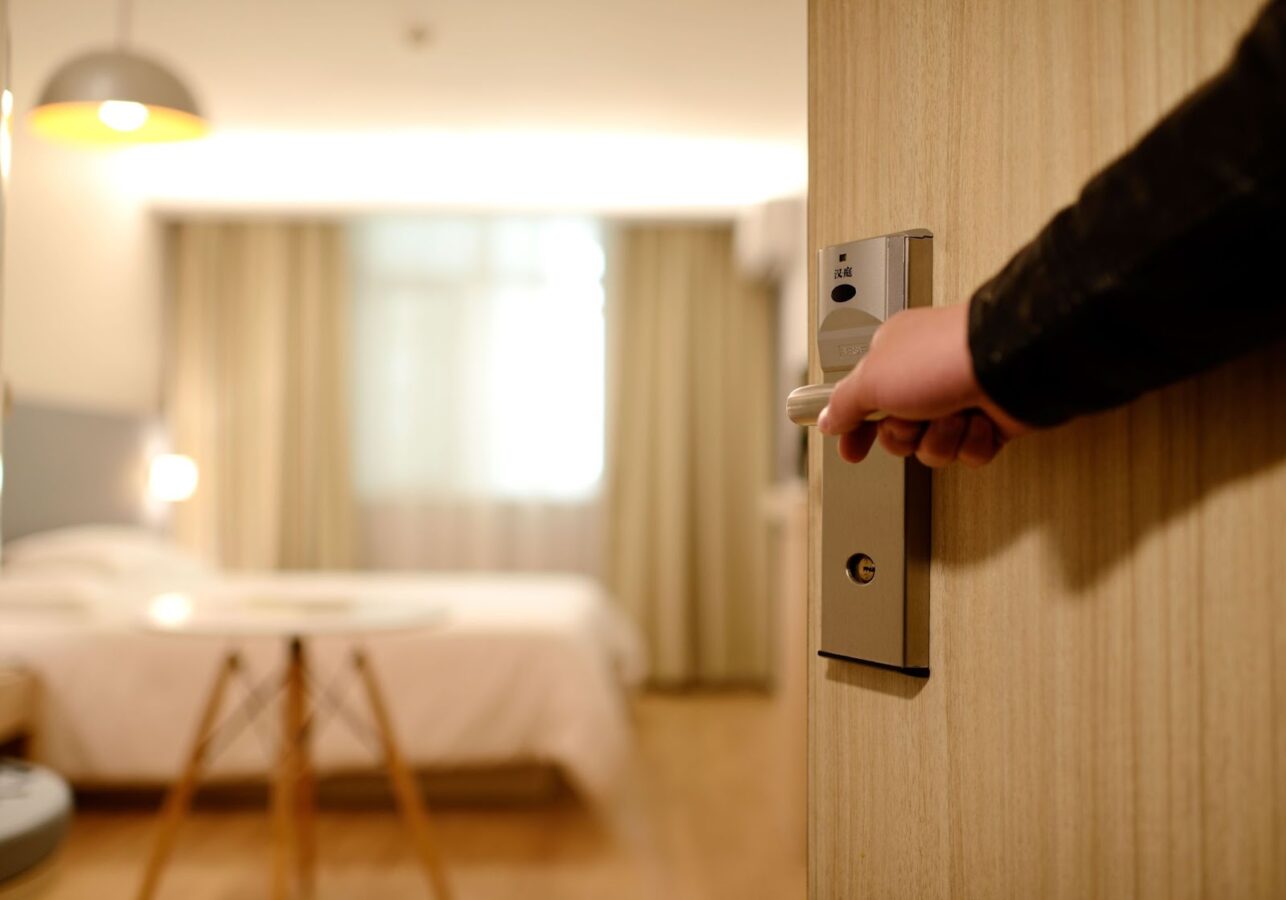
Good communication is essential for training, resolving guest issues, and coordinating events. Communication platforms enable seamless connectivity between departments (front desk, supervisors, housekeeping, maintenance).
- Stat: Research shows 86% of hotel employees agree that good communication in reception areas greatly affects guests’ perceptions of a hotel’s service image.
- How technology helps: Task management, instant messaging, and real-time collaboration ensure efficient coordination and quick responses.
- Main takeaways:
- Communication platforms enable seamless connectivity.
- Prompt response times enhance guest satisfaction and operational efficiency.
2. Streamline Guest Communication
Staff need efficient ways to communicate directly with guests about events, policies, and updates. Messaging platforms and direct messaging channels let staff address inquiries and resolve issues quickly.
- Stat: An estimated 82% of hotel guests prefer to communicate with hotels via text or social messaging.
- How technology helps: Messaging technology enables efficient, personalized guest communication and faster issue resolution.
- Main takeaways:
- Direct guest messaging improves room service and personalization.
- Better communication increases guest loyalty and repeat business.
3. More Efficient Hotel Services
Many service failures stem from lack of technology and poor coordination. Clear responsibilities and streamlined operations reduce wasted time and errors.
- Insight: For every guest complaint, there may be many more dissatisfied guests who remain silent.
- How technology helps: Operations platforms automate processes, enable coordination across teams, and reduce manual effort.
- Main takeaways:
- Automation improves productivity and efficiency.
- Reduced repetition lets staff focus on higher-value tasks.
4. Eliminate Repetitive Jobs
Repetitive tasks lower morale and engagement. Automation frees employees from mundane duties so they can focus on more interesting and challenging work.
- Insight: Jobs with fewer repetitive tasks tend to be more satisfying.
- How technology helps: Tools can automate inventory management, report generation, and administrative tasks.
- Main takeaways:
- Automation increases job variety and satisfaction.
- Streamlined operations lead to better service quality.
5. Make Hotel Guests More Self-Sufficient
Modern travelers want convenience and autonomy. Self-service options reduce demand on staff and speed service.
- Stat: About 70% of hotel guests want technology that speeds up service time.
- How technology helps: Mobile check-in, digital concierge, self-serve kiosks, and guest apps let visitors handle check-in, access amenities, and request services independently.
- Main takeaways:
- Self-service enhances convenience and reduces wait times.
- Empowering guests frees staff to focus on higher-priority tasks.
Leverage Hotel Staff Technology with HelloShift
Hotel staff across roles — from line cooks to event planners — benefit from staff technology. Hotels adopting digital tools can better meet staff and guest expectations, improving performance and competitiveness.
HelloShift offers features for reservations, housekeeping, front desk operations, and staff collaboration:
- Staff collaboration across buildings, floors, shifts, and departments
- Housekeeping management with up-to-date room status
- Guest messaging and automated routine messages
- Contactless check-in and pre-check-in via mobile devices
- Website chat and digital guidebooks
These tools streamline communication, encourage collaboration, and foster a positive work environment for hotels, B&Bs, and resorts.
The Flat Iron Hotel (Indigo Road Hospitality Group) implemented HelloShift for real-time staff communication and rapid issue resolution, seamlessly integrating with their StayNTouch PMS.
Stop losing revenue to missed calls and voicemails. HelloShift AI Voice answers when staff is busy, guests enjoy mobile check-in and digital guidebooks, and your team coordinates seamlessly with real-time room status updates.
See what 24/7 AI call answering and one shared operations app do for your property. Book a personalized demo or start your free trial.
From our own call data: Across 15 months of AI-answered guest calls, about 1 in 4 arrived outside 8am to 6pm front desk hours. Read the analysis.